Last Updated: October 27, 2026
Quick Summary
To keep bread fresh at room temperature, control moisture and airflow by cooling the loaf completely, then matching the wrap to the bread type: a linen or cotton bag for sourdough and artisan loaves, a bread box for sandwich loaves, or a plastic bag for soft sandwich bread. Homemade bread lasts two to three days this way, so freeze what you will not eat within three days.
- Staling is not drying out: starch hardens and re-crystallises while the loaf still holds water.
- Homemade bread lasts two to three days at room temperature without commercial preservatives.
- Cool the loaf completely on a wire rack for at least two hours before storing it.
- Never wrap a warm loaf, since trapped steam softens the crust and invites mold.
- Frozen bread keeps for two to three months, and you should avoid refreezing a thawed loaf.
Table of Contents
- How to Keep Bread Fresh Longer at Room Temperature
- How Long Does Homemade Bread Last?
- How to Store Sourdough Bread So the Crust Stays Crisp
- How to Keep Bread Fresh Longer at Room Temperature: The Storage Methods That Work
- How to Freeze Bread for Longer Storage
- How to Handle Humidity, Mold and Seasonal Shifts
- What Matters Most
- Frequently Asked Questions
How to Keep Bread Fresh Longer at Room Temperature
Learning how to keep bread fresh longer comes down to one rule: control moisture and airflow.
Staling isn't drying out: starch hardens and re-crystallises, so a loaf can feel firm while still holding water. Cold speeds this up; air pulls moisture out.
How Long Does Homemade Bread Last?
Homemade bread lasts two to three days at room temperature, aging faster than shop-bought loaves without commercial preservatives. If you bake sourdough, you can also learn how to store a sourdough starter between bakes.
Cut the loaf only when you plan to eat it; once sliced, press the cut side down or wrap it tightly. For more foundational guidance, browse Bread Basics.
How to Store Sourdough Bread So the Crust Stays Crisp
Sourdough needs air, but not too much: plastic makes a thick crust leathery, open air makes it rock-hard. The middle ground is a breathable bag or ventilated bread box. For a complete setup, see the Sourdough Bread Baking Kit, which includes a bread storage bag.
Cool the loaf completely on a wire rack (at least two hours), store it cut side down if eating that day, then move it into a linen bread bag. Keep it away from the kettle, oven and direct sun.
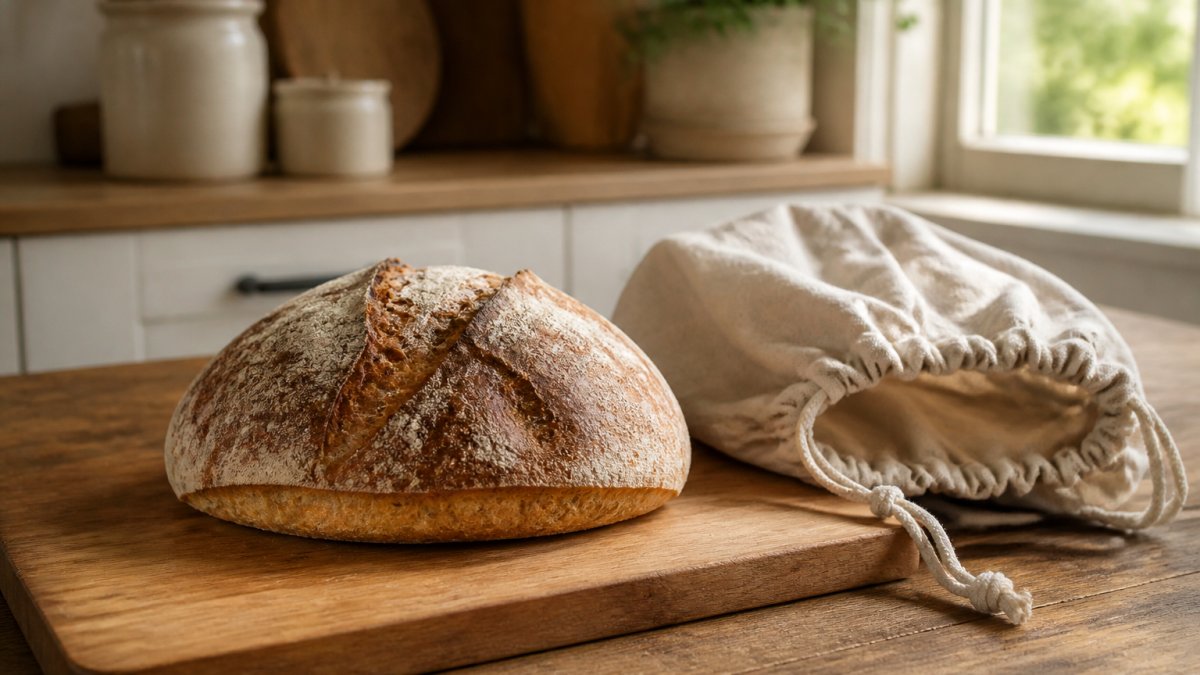
Never wrap a warm loaf: trapped steam softens the crust and invites mold.
Reusable Bread Bags for Homemade Bread | Linen Bread Storage Bags for Sourdough →
Our reusable linen bread bags have a food-safe moisture-resistant lining and drawstring closure.

How to Keep Bread Fresh Longer at Room Temperature: The Storage Methods That Work
| Method | Best For | Expected Freshness | Watch Out For |
|---|---|---|---|
| Linen or cotton bag | Sourdough, artisan loaves | 2-3 days | Dries out in very dry climates |
| Bread box | Sandwich loaves, daily use | 2-3 days | Needs cleaning; can trap humidity |
| Paper bag | Short-term, crusty bread | 1-2 days | Weak protection against dry air |
| Plastic bag | Soft sandwich bread | 2-3 days | Softens crust; traps moisture |
| Freezer | Any loaf, long storage | 2-3 months | Needs proper wrapping |
How to Freeze Bread for Longer Storage
Avoid refreezing a thawed loaf; each cycle damages the crumb.
How to Handle Humidity, Mold and Seasonal Shifts
Mold is a moisture problem, not a bread problem. In humid months a loaf may sweat inside sealed containers; in winter, central heating strips moisture and bread stales faster.
What Matters Most
Three habits do most of the work: cool the loaf fully, match the wrap to the bread type, and freeze what you will not eat within three days.
Frequently Asked Questions
Can I leave homemade bread out overnight?
Yes. Homemade bread is safe on the counter overnight as long as it is wrapped or bagged to slow moisture loss. Place it cut-side down on a board, or slip it into a linen bread bag with a moisture-resistant lining, and keep it away from direct sun and heat. Most loaves stay pleasant for two to three days this way. After that, slice and freeze what you will not finish rather than waiting for mold to appear.
Should you refrigerate bread to keep it fresh?
Skip the fridge for everyday loaves. Cold temperatures speed up staling, so bread that goes in soft comes out dry and crumbly within a day. Refrigeration only makes sense for sandwiches or fillings that need chilling for food safety. For longer storage, freeze bread instead: a freezer stops staling almost entirely and keeps slices usable for weeks.
How should you freeze bread so it stays fresh?
Slice the loaf first so you can thaw only what you need. Wrap the slices tightly in a freezer bag or reusable bread bag, press out as much air as possible, and freeze within a day of baking. To thaw, leave a portion on the counter for an hour or toast slices straight from frozen. Avoid refreezing thawed bread, since the texture suffers each time.
Storing bread well should feel simple, not like another chore. At Simply H&K, we build tools that make the whole process warmer and easier, from linen bread bags with a moisture-resistant lining to a curated baking kit for new bakers. Get started with Simply H&K and keep every loaf worth sharing.
